Jamie Oliver Mango Rice Pudding Recipe Easy Guide
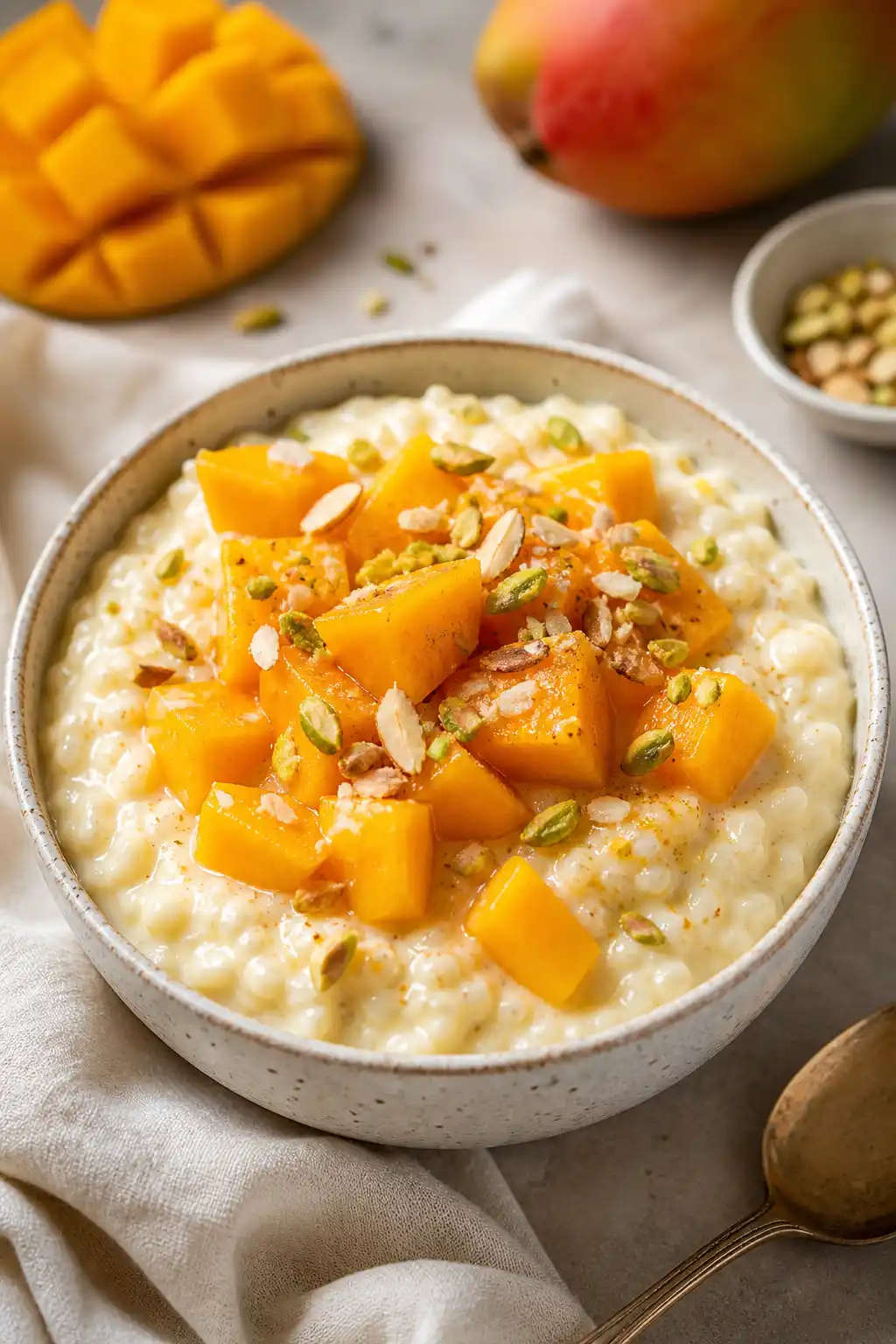
The Jamie Oliver mango rice pudding recipe brings together the comforting warmth of traditional rice pudding and the vibrant sweetness of mangoes. This fusion dessert feels both familiar and exciting, making it a favorite for families and food lovers alike. Rice pudding has been enjoyed across cultures for centuries, yet adding mango gives it a tropical twist that elevates its appeal.
This dish stands out because it balances creamy texture with fruity freshness. Unlike heavier desserts, it doesn’t feel overwhelming. Instead, it offers a light yet satisfying experience. Whether served warm on a cool evening or chilled during summer, it adapts beautifully to different occasions.
Moreover, the recipe reflects simplicity. It uses everyday ingredients but transforms them into something special. That’s the charm behind dishes inspired by Jamie Oliver—they’re approachable, flavorful, and practical.
In addition, the mango element introduces natural sweetness, reducing the need for excessive sugar. As a result, it’s not only delicious but also a slightly healthier indulgence. Overall, this dessert proves that small twists can create big flavor differences.
Who is Jamie Oliver?
Jamie Oliver is widely known for making cooking accessible to everyone. His recipes often focus on fresh ingredients, simple techniques, and bold flavors. Over the years, he has inspired millions to cook at home with confidence.
His approach emphasizes:
- Fresh, seasonal ingredients
- Easy-to-follow steps
- Balanced nutrition
- Creative flavor combinations
Because of this philosophy, his desserts—including rice pudding variations—are never overly complicated. Instead, they encourage experimentation. This mango rice pudding recipe reflects that same spirit, blending tradition with creativity.
Why Mango Rice Pudding is Special
Mango rice pudding stands out due to its unique combination of textures and flavors. While traditional rice pudding is creamy and mild, mango introduces brightness and natural sweetness.
Key highlights include:
- Creamy base contrasts with juicy fruit
- Naturally sweet, reducing added sugar
- Suitable for both warm and cold serving
- Versatile for different dietary needs
Additionally, mango is rich in vitamins, especially vitamins C and A. So, the dessert not only tastes good but also offers nutritional benefits. It’s a rare combination—comfort food that feels refreshing.
Key Ingredients Overview
Creating the perfect mango rice pudding starts with understanding the ingredients. Each component plays a role in building flavor and texture.
Essential Ingredients
- Short-grain rice
- Milk or plant-based alternative
- Sugar or natural sweetener
- Fresh mango pulp
- Vanilla extract
- Cardamom (optional)
These ingredients work together to create a creamy, aromatic dessert. However, quality matters. Choosing fresh mangoes and the right rice can make a noticeable difference.
Choosing the Right Rice
Not all rice varieties produce the same texture. Short-grain rice is preferred because it releases starch during cooking, creating a creamy consistency.
Best options include:
- Arborio rice
- Pudding rice
- Short-grain white rice
Avoid long-grain rice, as it doesn’t provide the same richness.
Selecting Fresh Mangoes
Fresh mangoes are key to achieving authentic flavor. Look for:
- Bright color
- Sweet aroma
- Slight softness
Popular varieties like Alphonso or Chaunsa work particularly well. They offer intense sweetness and smooth texture, perfect for blending into the pudding.
Step-by-Step Cooking Method
Preparation Stage
Before starting, a little preparation goes a long way in ensuring the pudding turns out smooth and creamy. Paying attention to these early steps helps prevent common issues like lumps or uneven cooking.
- Rinse the rice thoroughly under cold water until the water runs clear. This removes excess starch and prevents the pudding from becoming overly sticky.
- Peel ripe mangoes and blend them into a smooth puree. Fresh puree gives the best flavor and color.
- Measure all ingredients in advance to maintain consistency during cooking.
Taking these steps creates a strong foundation for the recipe. As a result, the cooking process becomes easier and more controlled, leading to a better final texture.
Cooking Process
The cooking stage requires patience and steady attention. Rice pudding develops its signature creaminess when cooked slowly over gentle heat.
- Heat the milk in a heavy-bottomed pan over medium heat.
- Add the rinsed rice and bring the mixture to a gentle simmer.
- Stir frequently to prevent the rice from sticking to the bottom.
- Continue cooking for 20–25 minutes until the rice becomes soft and the mixture thickens.
Consistency is key here. The pudding should thicken gradually while remaining soft and creamy. If it cooks too quickly, the texture may turn grainy instead of smooth.
Adding Mango Flavor
Once the rice pudding is cooked, it’s time to introduce the mango flavor. This step should be done carefully to preserve the fruit’s freshness.
- Allow the pudding to cool slightly before adding the mango.
- Stir in the mango puree gently until well combined.
- Taste and adjust the sweetness if needed.
This method ensures the mango flavor stays vibrant and natural rather than becoming dull from heat.
Tips for Perfect Texture
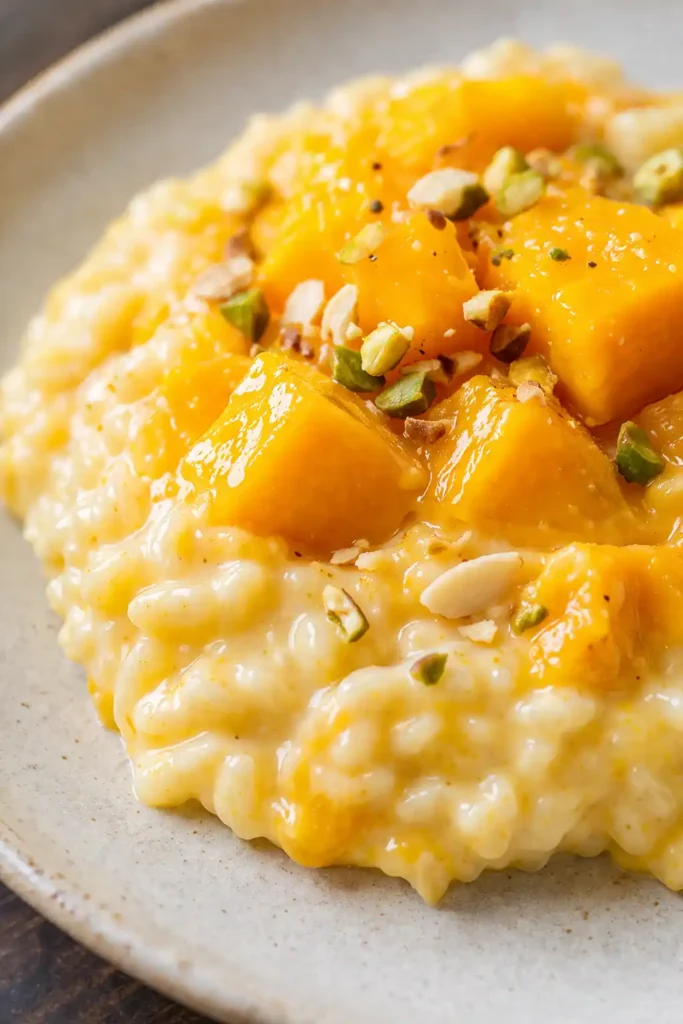
Achieving the perfect texture requires small but important adjustments during cooking. Even minor changes can significantly improve the result.
Helpful tips:
- Stir continuously to prevent burning or sticking
- Use full-fat milk for a richer, creamier consistency
- Add warm milk gradually if the pudding becomes too thick
- Avoid overcooking after adding the mango
By following these tips, the pudding will have a silky, smooth texture that feels indulgent yet light.
Flavor Variations
Vegan Version
For those who prefer a dairy-free option, this recipe can be easily adapted without losing its creamy appeal.
- Replace regular milk with coconut milk or almond milk
- Use maple syrup or agave instead of sugar
This variation adds a mild coconut flavor that pairs beautifully with mango, creating a more tropical taste profile.
Low Sugar Option
If reducing sugar is a priority, simple adjustments can make the dessert healthier while keeping it delicious.
- Use naturally sweet, fully ripe mangoes
- Add a small amount of honey or skip sugar entirely
This approach keeps the dessert light and lets the natural fruit flavor shine.
Nutritional Value
Mango rice pudding is not just a treat for the taste buds—it also provides several essential nutrients. While it should still be enjoyed in moderation, it offers a better balance compared to heavily processed desserts.
Key Nutritional Benefits
- Provides energy through carbohydrates
- Contains calcium from milk for stronger bones
- Offers vitamin C from mango for immune support
- Includes fiber that aids digestion
Nutritional Breakdown
| Nutrient | Benefit | Source |
|---|---|---|
| Carbohydrates | Energy production | Rice, sugar |
| Calcium | Bone health | Milk |
| Vitamin C | Immunity boost | Mango |
| Fiber | Digestive support | Mango, rice |
| Healthy fats | Sustained energy | Nuts (optional) |
Overall, this dessert strikes a balance between indulgence and nourishment when prepared thoughtfully.
Serving Suggestions
Presentation plays an important role in enhancing the overall experience. This pudding can be served in several appealing ways depending on the occasion.
- Serve warm with a sprinkle of chopped nuts for a comforting dessert
- Chill and top with fresh mango slices for a refreshing treat
- Garnish with mint leaves for a pop of color and freshness
Additionally, using glass bowls or elegant plates highlights the creamy texture and vibrant mango topping, making the dish visually appealing.
Storage and Reheating
Proper storage helps maintain both flavor and texture.
- Store in an airtight container in the refrigerator
- Consume within 2–3 days for best quality
- Reheat gently on low heat, adding a splash of milk if needed
Avoid overheating, as it can cause the pudding to thicken too much or lose its smooth consistency.
Common Mistakes to Avoid
Even a simple recipe can go wrong without proper care. Being aware of these common mistakes can help ensure success.
- Using long-grain rice instead of short-grain rice
- Adding mango puree while the pudding is still too hot
- Cooking on high heat, which can burn the milk
- Not stirring frequently enough
Each of these mistakes can affect both texture and flavor, so attention to detail is essential.
Expert Cooking Tips
Experienced cooks often rely on small techniques to elevate the dish from good to exceptional.
- Lightly toast the rice before adding milk for added depth of flavor
- Add a pinch of salt to enhance the sweetness naturally
- Always use fresh mango puree instead of canned for the best results
These subtle improvements make a noticeable difference, giving the pudding a more refined and delicious finish.
FAQs About Jamie Oliver Mango Rice Pudding
1. What makes Jamie Oliver mango rice pudding recipe unique?
This recipe stands out because it combines traditional rice pudding techniques with fresh mango flavor, creating a tropical twist. It focuses on simple ingredients and balanced sweetness, making it both comforting and refreshing. The method ensures creamy texture while preserving mango freshness, resulting in a dish that feels modern yet familiar and easy to prepare at home.
2. Can mango rice pudding be made ahead of time?
Yes, it can be prepared in advance and stored in the refrigerator for up to three days. In fact, chilling often enhances the flavor as the ingredients blend together. When serving later, it can be enjoyed cold or gently reheated with a bit of milk to restore its creamy consistency without compromising taste or texture.
3. Which mango variety works best for this recipe?
Sweet and smooth varieties like Alphonso or Chaunsa are ideal because they provide rich flavor and vibrant color. These mangoes blend easily into the pudding, creating a silky texture. However, any ripe, juicy mango can work as long as it is naturally sweet and free from fibrous strands.
4. Is this recipe suitable for a healthy diet?
While it is a dessert, it can be part of a balanced diet when consumed in moderation. Using natural sweeteners and fresh mango reduces added sugar. Additionally, milk provides calcium and mango offers vitamins, making it a slightly healthier alternative to processed desserts.
5. Can the recipe be made vegan?
Yes, it can easily be adapted by replacing dairy milk with plant-based options like coconut or almond milk. These alternatives not only make the dish vegan but also add unique flavors. Coconut milk, in particular, complements mango beautifully, enhancing the tropical taste of the pudding.
6. How can the texture be improved if it becomes too thick?
If the pudding thickens too much, simply add warm milk gradually while stirring. This helps restore the creamy consistency without affecting flavor. It’s important to do this slowly to avoid making the mixture too thin, ensuring the pudding remains rich and smooth.
Conclusion
The Jamie Oliver mango rice pudding recipe is a perfect example of how a simple dessert can be transformed into something truly special. By combining creamy rice pudding with the natural sweetness of ripe mangoes, this dish offers a comforting yet refreshing experience. It’s easy to prepare, adaptable to different dietary needs, and suitable for both everyday meals and special occasions.
Moreover, the recipe reflects a balanced approach to cooking—using fresh ingredients, minimal processing, and thoughtful techniques. Whether served warm on a cozy evening or chilled on a hot day, it consistently delivers rich flavor and smooth texture. With just a few expert tips and careful preparation, anyone can achieve excellent results at home.
For more authentic recipes and inspiration, explore the official website of Jamie Oliver: https://www.jamieoliver.com/
Print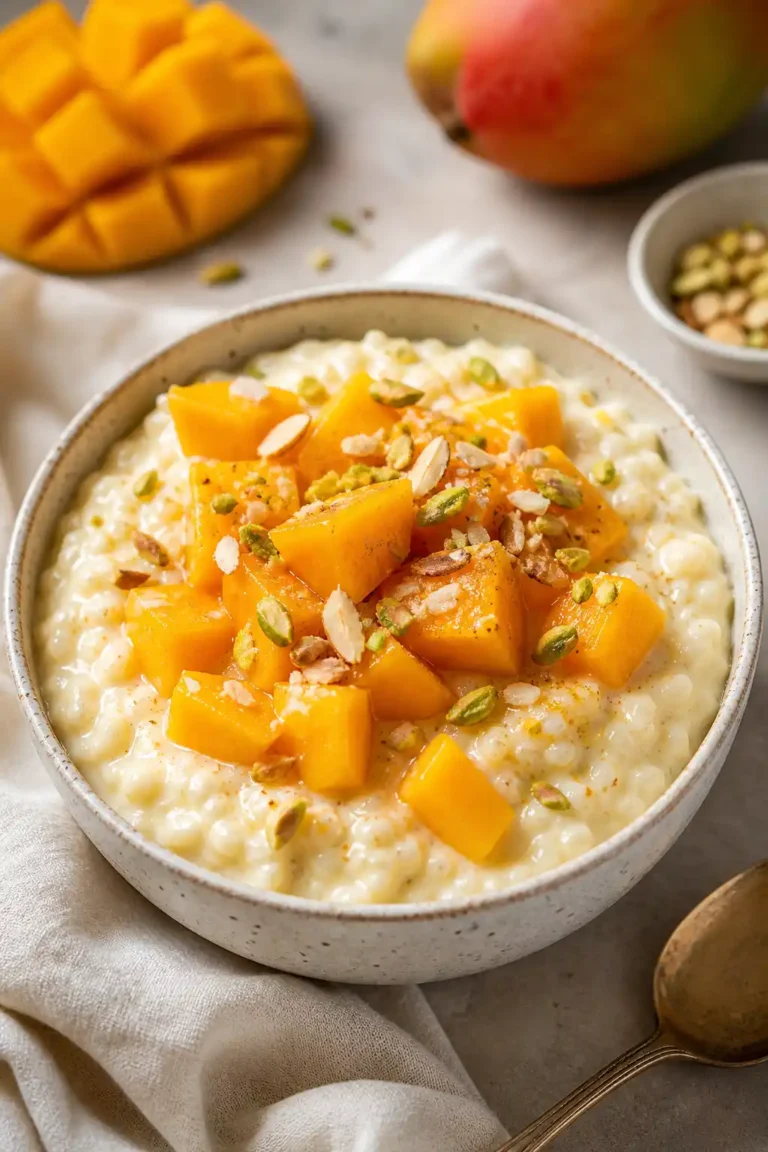
Jamie Oliver Mango Rice Pudding Recipe
This Jamie Oliver-inspired mango rice pudding is a creamy, comforting dessert with a tropical twist. It blends soft, slow-cooked rice with rich milk and naturally sweet mango puree. The result is a smooth, flavorful pudding that feels both indulgent and refreshing. Perfect for any season, it can be served warm for a cozy treat or chilled for a light dessert. Simple ingredients and easy steps make it ideal for beginners and experienced cooks alike.
- Total Time: 35 minutes
- Yield: 4 servings
Ingredients
- 1/2 cup short-grain rice (Arborio or pudding rice)
- 3 cups full-fat milk (or coconut milk for vegan option)
- 1/4 cup sugar (adjust to taste)
- 1 cup fresh mango puree
- 1/2 tsp vanilla extract
- 1/4 tsp ground cardamom (optional)
- Pinch of salt
- Fresh mango cubes (for garnish)
- Chopped nuts (optional)
Instructions
- Rinse the rice under cold water until the water runs clear.
- In a heavy-bottomed pan, heat the milk over medium heat.
- Add the rice and bring to a gentle simmer.
- Cook slowly, stirring frequently to prevent sticking.
- Continue cooking for 20–25 minutes until rice is soft and creamy.
- Add sugar, vanilla extract, and cardamom (if using). Mix well.
- Remove from heat and let it cool slightly.
- Stir in fresh mango puree gently.
- Taste and adjust the sweetness if needed.
- Serve warm or chilled, topped with mango cubes and nuts.
Notes
- Always add mango after cooking to preserve fresh flavor.
- Stir regularly to avoid lumps or burning.
- Use ripe mangoes for natural sweetness.
- Adjust milk quantity for desired consistency.
- Coconut milk adds a richer, tropical taste.
- Prep Time: 10 minutes
- Cook Time: 25 minutes
- Category: Dessert
- Method: Stovetop
- Cuisine: Fusion
- Diet: Vegetarian