Jamie Oliver Spaghetti Frittata Recipe for Family Meals
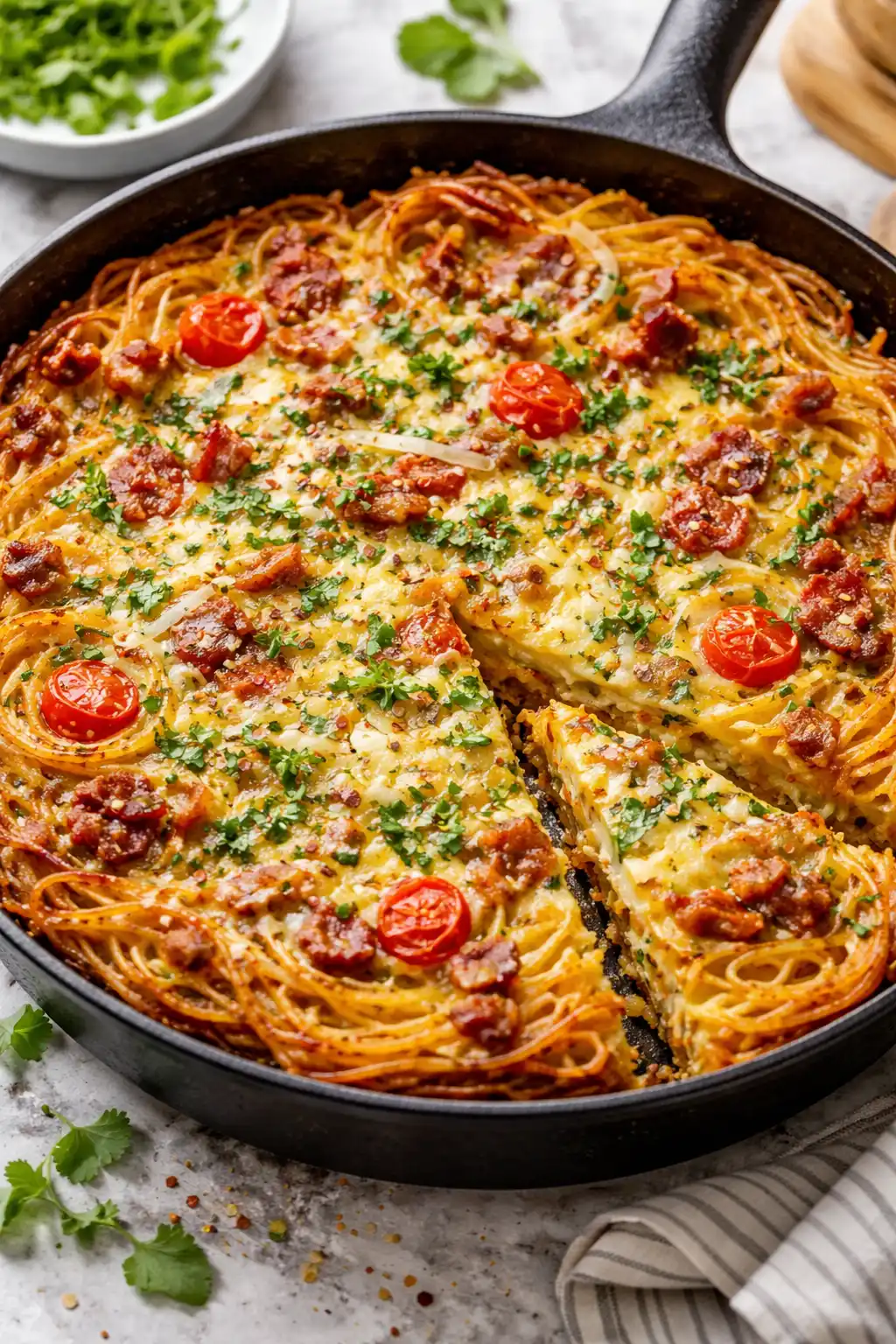
The Jamie Oliver spaghetti frittata recipe is one of those clever dishes that turns simple ingredients into something satisfying and memorable. It combines cooked spaghetti, eggs, cheese, and flavorful seasonings into a crispy, golden skillet meal that feels both comforting and practical. While traditional pasta dishes usually rely on sauces, this recipe transforms leftover spaghetti into a completely different experience.
Many home cooks love this dish because it reduces food waste while still delivering bold flavor. In addition, it’s quick enough for busy weeknights yet impressive enough to serve during brunch or casual gatherings. The outside becomes beautifully crisp, while the inside stays soft and cheesy.
Another reason for its popularity is flexibility. People can easily customize it with vegetables, herbs, meats, or extra cheese. As a result, every version feels unique without requiring complicated cooking skills.
Furthermore, the dish reflects the relaxed and approachable cooking style associated with Jamie Oliver. His recipes often focus on fresh ingredients, easy preparation, and family-friendly meals. That balance is exactly what makes this recipe so appealing for modern kitchens.
Why This Recipe Has Become So Popular
Spaghetti frittata has gained attention because it solves a common kitchen problem: leftover pasta. Instead of reheating plain noodles, this recipe gives them a second life with minimal effort. Consequently, families save time and reduce waste without sacrificing taste.
Several factors contribute to its growing popularity:
- It requires affordable ingredients
- Preparation is simple and beginner-friendly
- The recipe cooks in one pan
- It works for breakfast, lunch, or dinner
- Leftovers taste excellent the next day
Another major advantage is versatility. Cooks can add spinach, mushrooms, bacon, sausage, peppers, or herbs, depending on personal preference. Therefore, the meal never feels repetitive.
Social media has also helped boost interest in crispy pasta dishes. Golden textures and cheesy interiors photograph beautifully, making them highly shareable online. At the same time, food lovers appreciate recipes that combine comfort with creativity.
The recipe is especially useful for busy parents and students. Since it doesn’t require expensive ingredients or advanced techniques, almost anyone can prepare it successfully. Even inexperienced cooks usually achieve good results after one attempt.
Additionally, the combination of eggs and pasta creates a rich, filling meal that satisfies hunger for hours. That practical quality explains why many people continue making it regularly.
What Makes Jamie Oliver’s Style Unique
Jamie Oliver is known for recipes that feel approachable rather than intimidating. His cooking style emphasizes fresh ingredients, bold flavors, and simple methods that everyday cooks can follow confidently.
In this spaghetti frittata recipe, his approach becomes very clear. Rather than overcomplicating the dish, he focuses on balance and texture. The crispy pasta edges contrast beautifully with the creamy egg center, while herbs and cheese provide depth without overwhelming the ingredients.
Some defining features of his cooking style include:
| Feature | Benefit |
|---|---|
| Fresh herbs | Brighter flavor |
| Minimal ingredients | Easier preparation |
| Flexible recipes | More creativity |
| Rustic presentation | Less pressure for perfection |
| Fast cooking methods | Ideal for busy lifestyles |
Moreover, his recipes encourage confidence in the kitchen. Instead of demanding exact perfection, they allow room for experimentation. That freedom makes home cooking more enjoyable and less stressful.
Another important aspect is nutrition. Many of his dishes balance comfort food with wholesome ingredients. In this recipe, eggs provide protein while vegetables can easily be added for extra nutrients.
For more inspiration from his cooking philosophy, readers can visit Jamie Oliver Official Website.
Ingredients Needed for the Recipe
The ingredient list for this recipe is refreshingly simple. Most kitchens already contain the basics, which makes the meal ideal for spontaneous cooking.
Main Ingredients
- 300g cooked spaghetti
- 6 large eggs
- 1 cup grated Parmesan cheese
- 2 tablespoons olive oil
- 1 small onion, finely chopped
- 2 garlic cloves, minced
- Salt and black pepper to taste
- Fresh parsley or basil
- Optional chili flakes
Optional Additions
- Spinach
- Mushrooms
- Bacon
- Sausage
- Cherry tomatoes
- Mozzarella cheese
Best Pasta Choices
Although spaghetti is traditional, other pasta shapes can work well too. However, long pasta tends to create the best texture because it forms crisp layers during cooking.
Recommended pasta options include:
- Spaghetti
- Linguine
- Fettuccine
- Angel hair pasta
Cheese and Egg Combinations
Eggs act as the binding ingredient, while cheese adds richness and flavor. Parmesan is the classic option because it melts beautifully and enhances the savory taste.
Still, cooks can experiment with:
- Pecorino Romano
- Mozzarella
- Cheddar
- Gruyère
Using multiple cheeses often creates a more complex flavor profile.
Kitchen Equipment Required
One reason this recipe is so convenient is that it needs very little equipment. Most home kitchens already contain everything necessary.
Essential tools include:
- Large nonstick frying pan
- Mixing bowl
- Whisk or fork
- Spatula
- Knife and cutting board
A nonstick skillet is especially important because it helps the frittata release easily after cooking. In addition, an oven-safe pan is useful if finishing the dish under the broiler.
Many cooks prefer cast iron skillets because they create an extra crispy crust. However, a standard frying pan still works perfectly well.
Preparing all ingredients before cooking also makes the process smoother. Since the recipe cooks relatively quickly, having everything ready prevents overcooking.
Step-by-Step Jamie Oliver Spaghetti Frittata
Preparing the Pasta
Start by cooking the spaghetti until slightly firm. Overcooked pasta may become mushy later, so keeping it al dente works best.
Once cooked:
- Drain the pasta well
- Toss lightly with olive oil
- Allow it to cool slightly
If using leftover spaghetti, separate any clumps gently before adding it to the mixture.
Mixing the Egg Base
In a large bowl, whisk together:
- Eggs
- Parmesan cheese
- Salt
- Pepper
- Fresh herbs
Next, stir in the cooked spaghetti until evenly coated. The mixture should appear creamy but not overly wet.
At this stage, additional ingredients such as spinach, onions, or cooked bacon can also be added.
Cooking the Frittata Perfectly
Heat olive oil in a large skillet over medium heat. Add onions and garlic first, cooking until soft and fragrant.
Pour the spaghetti mixture into the pan and spread it evenly. Then:
- Cook for 6–8 minutes
- Press gently with a spatula
- Reduce heat if browning too quickly
Once the bottom becomes golden, carefully flip the frittata using a plate or finish it under the broiler for several minutes.
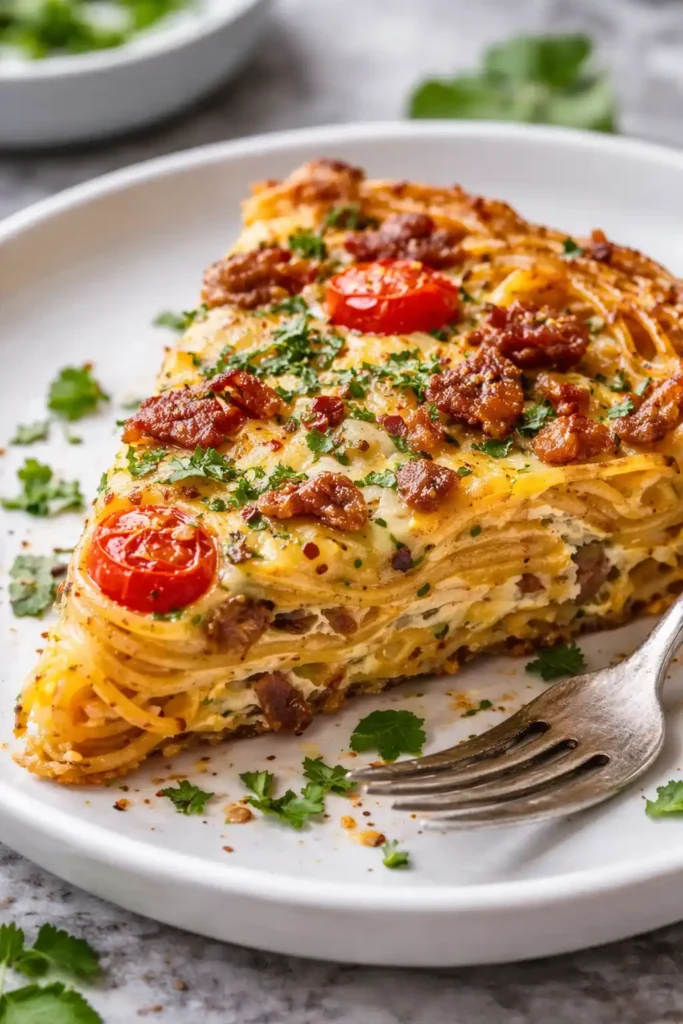
The finished dish should have:
- Crispy edges
- Soft center
- Melted cheese
- Rich aroma
Allow it to rest briefly before slicing.
Tips for the Best Texture and Flavor
Perfect spaghetti frittata depends heavily on texture. A few small techniques can improve the final result dramatically.
Helpful Tips
- Use cold leftover pasta for better structure
- Don’t overload with wet vegetables
- Cook slowly for even browning
- Use enough cheese for richness
- Let the frittata rest before slicing
Additionally, seasoning matters more than many people expect. Since pasta and eggs are naturally mild, herbs and cheese help develop deeper flavor.
Fresh basil, parsley, oregano, and thyme all work beautifully. Meanwhile, chili flakes provide subtle heat without overpowering the dish.
Another useful trick involves pressing the pasta mixture lightly during cooking. Doing so helps the noodles crisp evenly against the skillet.
Finally, patience is important. Cooking over medium-low heat prevents burning while allowing the center to set properly.
Common Mistakes to Avoid
Although the recipe is fairly straightforward, several common mistakes can affect the final texture and flavor.
Overcooking the Eggs
Eggs continue cooking after removal from heat. Therefore, slightly undercooking the center prevents dryness.
Using Too Much Liquid
Vegetables like tomatoes or mushrooms release moisture. If added excessively, the frittata may become soggy.
Flipping Too Early
Trying to flip before the bottom sets often causes breaking. Waiting until the edges look firm helps maintain structure.
Skipping Seasoning
Plain pasta and eggs require enough seasoning to taste balanced. Salt, pepper, herbs, and cheese all contribute important flavor.
Using Thin Pans
Very thin skillets distribute heat unevenly, increasing the risk of burning. Heavier pans generally create better results.
Avoiding these mistakes significantly improves consistency and presentation.
Variations of Spaghetti Frittata
One of the biggest strengths of this recipe is adaptability. Small ingredient changes can create entirely different flavor profiles.
Vegetarian Version
Vegetarian spaghetti frittata often includes:
- Spinach
- Zucchini
- Bell peppers
- Mushrooms
- Fresh herbs
These ingredients add freshness and color while keeping the dish satisfying.
Meat Lover’s Version
For extra richness, many people add:
- Crispy bacon
- Italian sausage
- Ham
- Chicken
These proteins pair especially well with Parmesan cheese and garlic.
Spicy Italian Version
A spicy variation can include:
- Chili flakes
- Spicy sausage
- Pepper jack cheese
- Hot sauce
This version delivers stronger flavor while maintaining the comforting texture of the original recipe.
Serving Suggestions
Spaghetti frittata works beautifully in multiple settings. Because it can be served warm or cold, it adapts easily to different occasions.
Popular serving ideas include:
| Occasion | Serving Suggestion |
|---|---|
| Breakfast | With fresh fruit |
| Lunch | Alongside salad |
| Dinner | With roasted vegetables |
| Brunch | Served in slices |
| Picnic | Cold with dipping sauce |
Fresh green salad provides a refreshing contrast to the richness of eggs and cheese. Meanwhile, garlic bread creates a more indulgent meal.
Some cooks also enjoy topping slices with extra Parmesan or chili oil before serving.
Storage and Reheating Tips
This recipe stores surprisingly well, which makes it ideal for meal prep.
Refrigeration
- Store in airtight containers
- Refrigerate for up to 4 days
Freezing
Although possible, freezing may slightly affect texture. For best results:
- Wrap slices individually
- Freeze for up to 2 months
Reheating
The best reheating method is using a skillet. This restores crispness far better than microwaving.
However, if using a microwave:
- Heat in short intervals
- Avoid overheating
Cold spaghetti frittata also tastes excellent straight from the refrigerator.
Nutritional Information
The nutritional profile varies depending on ingredients used, but the dish generally provides a balanced combination of protein, carbohydrates, and fats.
Approximate nutrition per serving:
| Nutrient | Amount |
|---|---|
| Calories | 320–400 |
| Protein | 16g |
| Carbohydrates | 28g |
| Fat | 18g |
| Calcium | High |
| Fiber | Moderate |
Adding vegetables increases fiber and vitamins, while reducing cheese lowers fat content.
Because the recipe is highly customizable, it can fit different dietary preferences relatively easily.
Why This Dish Works for Busy Families
Busy families often need meals that are:
- Fast
- Affordable
- Filling
- Flexible
Fortunately, this recipe checks every box. It transforms leftovers into a completely new meal while using ingredients commonly found at home.
Parents especially appreciate how easily children accept the flavors. Since pasta and cheese already feel familiar, introducing vegetables becomes much easier.
The recipe also reduces cleanup because everything cooks in one skillet. That convenience matters significantly during hectic weekdays.
Moreover, leftovers can become lunch the next day, saving additional time and money.
Expert Cooking Advice
Experienced cooks often recommend focusing on balance rather than complexity. The beauty of spaghetti frittata lies in simplicity.
Professional Tips
- Use freshly grated cheese instead of pre-packaged
- Taste ingredients before mixing
- Allow proper browning for deeper flavor
- Use herbs generously but thoughtfully
Another expert suggestion involves layering flavor gradually. Cooking onions and garlic first builds a savory foundation that improves the entire dish.
Additionally, choosing quality olive oil makes a noticeable difference because its flavor remains prominent throughout cooking.
Finally, presentation matters. Slicing neatly and garnishing with herbs creates a more inviting appearance.
Best Side Dishes to Pair With It
The rich flavor of spaghetti frittata pairs best with lighter sides that add freshness and contrast.
Recommended Side Dishes
- Arugula salad
- Roasted tomatoes
- Garlic mushrooms
- Grilled asparagus
- Lemon-dressed greens
Beverage Pairings
- Sparkling water
- Fresh lemonade
- Iced tea
- Light white wine
These combinations help balance the richness while creating a complete meal experience.
Frequently Asked Questions
1. Can spaghetti frittata be made ahead of time?
Yes, spaghetti frittata is an excellent make-ahead dish because it stores and reheats very well. Many cooks actually believe the flavor improves after resting for several hours. Once cooled, the frittata can be refrigerated in airtight containers for up to four days. It may also be sliced into portions for meal prep. Reheating in a skillet helps restore crispness, although microwaving works for convenience when time is limited.
2. What type of pasta works best for this recipe?
Traditional spaghetti works best because long noodles create the signature layered texture associated with classic frittata recipes. However, linguine, fettuccine, and angel hair pasta also perform nicely. Short pasta can work in emergencies, but it usually doesn’t provide the same crispy structure. Slightly firm pasta is ideal because overcooked noodles may become too soft once combined with eggs and cheese during cooking.
3. Can this recipe be made vegetarian?
Absolutely. The vegetarian version is extremely popular and just as flavorful as meat-based variations. Spinach, mushrooms, zucchini, peppers, onions, and fresh herbs all blend beautifully with eggs and Parmesan cheese. Some cooks also include sun-dried tomatoes or olives for extra Mediterranean flavor. Because the dish already contains protein from eggs and cheese, it remains filling and satisfying even without meat additions.
4. How does someone keep the frittata from sticking?
Using a good-quality nonstick skillet makes the biggest difference. In addition, enough olive oil should coat the pan before adding the pasta mixture. Cooking over medium-low heat also prevents sticking because high temperatures can burn the bottom too quickly. Another useful trick involves allowing the frittata to set fully before attempting to flip or remove it from the pan. Patience greatly improves success.
5. Is spaghetti frittata served hot or cold?
One of the best things about spaghetti frittata is its flexibility. It tastes delicious both warm and cold, depending on preference and occasion. Freshly cooked slices offer crispy edges and melted cheese, while chilled leftovers develop a firmer texture that works perfectly for lunchboxes, picnics, or quick snacks. Because of this versatility, many people prepare extra portions intentionally for later meals during the week.
6. Can gluten-free pasta be used successfully?
Yes, gluten-free spaghetti works surprisingly well in this recipe. However, the pasta should be cooked carefully because some gluten-free varieties soften more quickly than traditional wheat pasta. Slightly undercooking the noodles helps maintain better structure during frying. Eggs and cheese still bind the mixture effectively, creating a crispy exterior and soft center. As a result, gluten-sensitive eaters can enjoy the dish without sacrificing flavor or texture.
Conclusion
The Jamie Oliver spaghetti frittata proves that simple ingredients can create extraordinary comfort food. By combining leftover pasta, eggs, cheese, and fresh seasonings, this dish delivers crisp texture, rich flavor, and endless versatility.
Its popularity continues to grow because it’s practical, affordable, and easy to customize. Whether served for breakfast, lunch, dinner, or brunch, spaghetti frittata consistently satisfies without requiring advanced cooking skills.
Furthermore, the recipe reflects a modern approach to home cooking where reducing waste and maximizing flavor go hand in hand. From vegetarian versions to spicy variations, there are countless ways to make the dish personal and exciting.
For families seeking quick meals or cooks searching for creative leftover ideas, this recipe remains a dependable and delicious option worth making again and again.
Print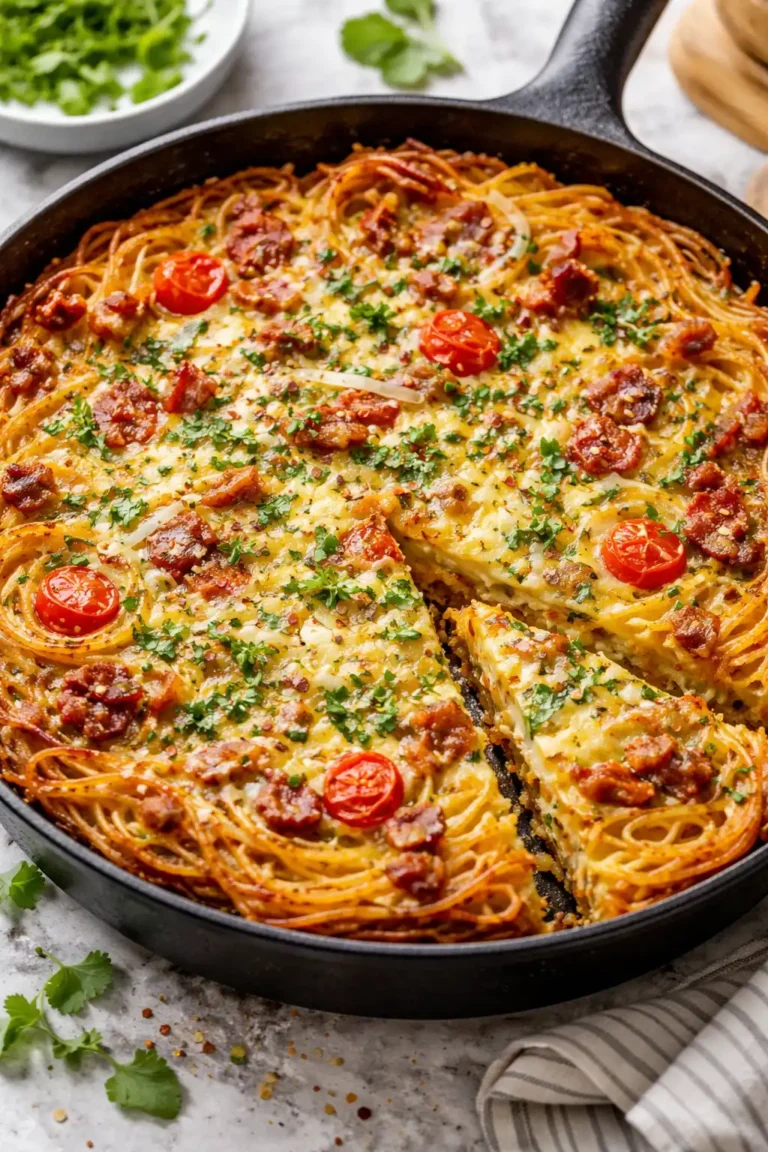
Jamie Oliver Spaghetti Frittata Recipe
This Jamie Oliver-inspired spaghetti frittata is a crispy, cheesy, and comforting Italian-style dish made with leftover spaghetti, eggs, Parmesan cheese, and fresh herbs. It’s quick to prepare, budget-friendly, and perfect for breakfast, brunch, lunch, or dinner. The golden crust and creamy center make every bite satisfying and flavorful.
- Total Time: 35 minutes
- Yield: 4 servings
Ingredients
- 300g cooked spaghetti
- 6 large eggs
- 1 cup grated Parmesan cheese
- 2 tablespoons olive oil
- 1 small onion, finely chopped
- 2 garlic cloves, minced
- ½ teaspoon salt
- ½ teaspoon black pepper
- 1 tablespoon chopped parsley or basil
- ½ teaspoon chili flakes (optional)
- ½ cup cherry tomatoes (optional)
- ½ cup cooked bacon or sausage (optional)
Instructions
- Cook the spaghetti until al dente if using fresh pasta. Drain and let cool slightly.
- In a large bowl, whisk together eggs, Parmesan cheese, salt, pepper, and herbs.
- Add the cooked spaghetti to the egg mixture and toss until evenly coated.
- Heat olive oil in a large nonstick skillet over medium heat.
- Sauté onion and garlic for 2–3 minutes until soft and fragrant.
- Pour the spaghetti mixture into the skillet and spread evenly.
- Cook for 6–8 minutes until the bottom becomes crispy and golden brown.
- Carefully flip the frittata using a large plate or finish under the broiler for 3–4 minutes.
- Let rest for a few minutes before slicing and serving.
Notes
- Leftover cold spaghetti works best for texture.
- Add vegetables like spinach or mushrooms for extra flavor.
- Use freshly grated Parmesan for better melting and taste.
- Cook slowly over medium-low heat to avoid burning.
- This dish can be served warm or cold.
- Prep Time: 15 minutes
- Cook Time: 20 minutes
- Category: Main Course
- Method: Pan-frying
- Cuisine: Italian
- Diet: Vegetarian